
Prepare e-file IRS 1099 NEC, MISC, INT, DIV, R, A & K for 2026File 1099 Forms Online
File IRS Form 1099-DIV Online for Tax Year 2026-27
Report dividends and other investment distributions accurately with Form 1099-DIV. Form1099Online helps businesses, financial institutions, and other eligible payers prepare and e-file Form 1099-DIV online for the 2026 tax year.
- Prepare Form 1099-DIV online: Enter payer, recipient, and dividend distribution details in the required fields.
- Manage information returns electronically: Prepare and submit Form 1099-DIV through Form1099Online.
- Access customer support: Get assistance with using the platform through US-based customer support.
Use Form1099Online to prepare your 2026 Form 1099-DIV and manage your information reporting process online.
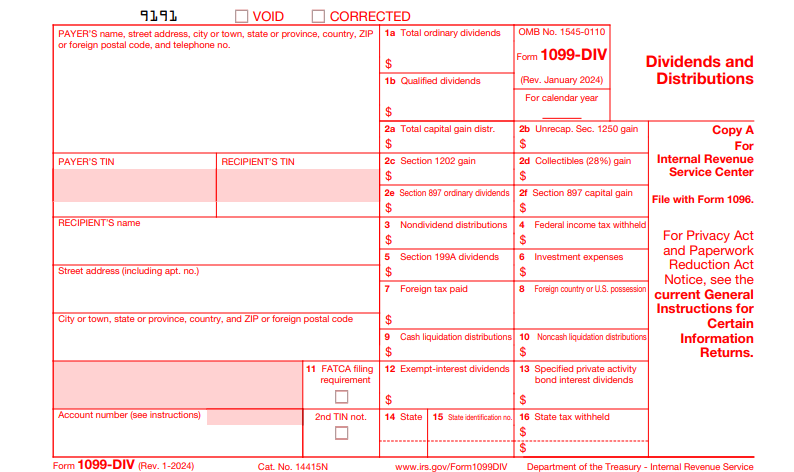
What Is IRS Form 1099-DIV
IRS Form 1099-DIV, titled Dividends and Distributions, is an information return used to report dividends and certain other distributions paid to investors during a calendar year. Banks, brokerage firms, corporations, mutual funds, and other applicable payers use this form to report qualifying payments to the Internal Revenue Service (IRS) and the recipients.
The information on Form 1099-DIV helps recipients prepare their federal income tax returns. It identifies different types of distributions, including ordinary dividends, qualified dividends, capital gain distributions, and certain tax-exempt or nontaxable distributions.
Businesses and other eligible payers can use Form1099Online to prepare and e-file Form 1099-DIV online.
Who Needs to File Form 1099-DIV
A business, corporation, financial institution, or other payer may need to file Form 1099-DIV when it makes reportable dividend or distribution payments during the tax year.
The form generally applies when a payer distributes dividends or other reportable amounts to shareholders or investors. Filing responsibilities depend on the nature of the payment and the applicable IRS reporting rules.
Common situations include:
- Corporations paying shareholders: A corporation may need to report dividends distributed to its shareholders.
- Brokerage firms and financial institutions: These organizations report qualifying dividends and distributions associated with investment accounts.
- Mutual funds and regulated investment companies: Applicable distributions to investors may require Form 1099-DIV reporting.
- Other eligible payers: Organizations making reportable distributions must determine whether the IRS requires an information return.
Form 1099-DIV is not the form for reporting ordinary payments to independent contractors. Those payments may require a different information return, depending on the payment type.
Who receives Form 1099-DIV?
Investors and shareholders who receive reportable dividends or distributions generally receive Form 1099-DIV from the payer. Recipients use the statement to identify the amounts reported to the IRS and determine how to report the income on their tax returns.
A payer generally must report dividends and other distributions of $10 or more. Additional reporting rules apply when federal income tax is withheld, foreign tax is paid on reportable distributions, or qualifying liquidation distributions are made. Check the current IRS instructions for the applicable reporting threshold and exceptions.
What Income Does Form 1099-DIV Report
Form 1099-DIV separates investment distributions into categories so that payers and recipients can identify the amounts associated with each type of income.
| Form 1099-DIV box | Information reported |
| Box 1a | Total ordinary dividends |
| Box 1b | Qualified dividends included in ordinary dividends |
| Box 2a | Total capital gain distributions |
| Box 3 | Nondividend distributions |
| Box 4 | Federal income tax withheld |
| Box 5 | Section 199A dividends |
| Box 7 | Foreign tax paid |
| Boxes 9 and 10 | Cash and noncash liquidation distributions |
The applicable boxes depend on the type of distribution and the reporting requirements. Consult the current IRS instructions for the complete list of boxes and their reporting rules.
How are dividends and capital gains taxed?
The tax treatment of distributions depends on the type of income and the recipient’s circumstances. Qualified dividends may qualify for preferential federal tax rates, while ordinary dividends are generally included in ordinary income. Capital gain distributions and nondividend distributions have their own reporting and tax considerations.
Form 1099-DIV reports the applicable amounts; it does not determine the recipient’s final tax liability. Recipients use the information when preparing their federal income tax returns.
What Are the Form 1099-DIV Filing Deadlines for 2026-27
Form 1099-DIV for tax year 2026 covers reportable distributions paid during the 2026 calendar year. The form is generally furnished to recipients and filed with the IRS in 2027.
| Filing requirement | General deadline for 2026 reporting |
| Furnish Form 1099-DIV to recipients | January 31, 2027, subject to the applicable weekend or holiday adjustment |
| File Form 1099-DIV with the IRS on paper | February 28, 2027, subject to the applicable weekend or holiday adjustment |
| E-file Form 1099-DIV with the IRS | March 31, 2027 |
January 31, 2027, falls on a Sunday, and February 28, 2027, also falls on a Sunday. The applicable next-business-day rules affect these deadlines. Confirm the final dates in the IRS instructions for the 2026 reporting year before submitting the forms.
Electronic filing gives payers more time to submit Form 1099-DIV than paper filing under the general deadlines. However, the recipient statement deadline remains a separate requirement.
The IRS generally requires electronic filing when a filer has 10 or more information returns in aggregate, subject to applicable rules and exceptions. The threshold applies across covered information return types rather than separately to each type of Form 1099.
What Information Is Required to File Form 1099-DIV
Prepare the payer and recipient information before creating Form 1099-DIV. Accurate records help reduce errors in recipient details, payment amounts, and tax reporting.
The information generally includes:
- Payer details: Legal name, address, and taxpayer identification number (TIN).
- Recipient details: Recipient’s name, address, and TIN.
- Distribution information: Total ordinary dividends, qualified dividends, capital gain distributions, and other applicable amounts.
- Withholding details: Federal income tax withheld and foreign tax paid, where applicable.
- Additional reporting details: Any other amounts required by the relevant boxes on Form 1099-DIV.
Review the figures against the payer’s financial records before submitting the return. Use the recipient’s correct taxpayer identification information and follow the IRS instructions for reporting each distribution.
How to File Form 1099-DIV Online
Form1099Online provides an online process for preparing and e-filing Form 1099-DIV. Payers can enter the required information, review the return, and submit it electronically through the platform.
Enter payer and recipient information
Provide the payer’s legal name, address, and TIN. Enter the recipient’s identifying details and confirm that the information matches the relevant records.
Report dividends and distributions
Enter the applicable amounts in the corresponding Form 1099-DIV boxes. Check ordinary dividends, qualified dividends, capital gain distributions, withholding, and other reportable amounts against the payer’s records.
Review and submit the form
Check the return for missing fields and data entry errors before submission. Submit the form through the platform and monitor the filing status for updates.
Provide the recipient statement
Furnish the recipient’s copy by the applicable IRS deadline and in the required format. Retain filing records and copies according to applicable recordkeeping requirements.
What Are the Penalties for Filing Form 1099-DIV Late
The IRS may assess penalties when a payer files an incorrect or late information return or fails to furnish a required recipient statement on time. Penalties can also apply when required information is missing or incorrect.
The amount depends on factors such as the filing delay, the nature of the error, whether the payer corrects the return, and whether the failure involves intentional disregard. Different rules and maximum amounts may apply depending on the circumstances and the tax year.
To reduce filing errors:
- Verify payer and recipient information before submission.
- Check distribution amounts against financial records.
- File the return and furnish recipient statements by the applicable deadlines.
- Correct errors promptly in accordance with IRS procedures.
- Review current IRS penalty guidance for the applicable reporting year.
For official information, refer to the IRS information return penalties page.
Important information: This page provides general information about Form 1099-DIV for the 2026 tax year. IRS requirements and deadlines may change. Review the latest official IRS instructions before filing.
Frequently Asked Questions
What is Form 1099-DIV used for?
Form 1099-DIV reports dividends and certain other distributions paid to investors during a calendar year. Payers submit the required information to the IRS and furnish the recipient’s statement for tax reporting.
When is Form 1099-DIV due for tax year 2026?
Form 1099-DIV for 2026 reports distributions paid during the 2026 calendar year. Recipient statements are generally due by January 31, 2027, while IRS filing deadlines generally fall in February for paper returns and March for electronic returns. Weekend and holiday adjustments apply where relevant.
Can I e-file Form 1099-DIV online?
Yes. Eligible payers can prepare and submit Form 1099-DIV electronically using an online filing service such as Form1099Online. The filer remains responsible for providing accurate information and meeting IRS requirements.
Who is required to issue Form 1099-DIV?
Corporations, brokerage firms, financial institutions, mutual funds, and other applicable payers may need to issue Form 1099-DIV when they make reportable dividend or distribution payments. The requirement depends on the payment type and applicable IRS rules.
What is the minimum amount for reporting dividends on Form 1099-DIV?
The general threshold is $10 for reportable dividends and certain distributions. Separate rules apply to withholding, foreign tax, and liquidation distributions. Payers must review the current IRS instructions for the applicable reporting requirements.
Read More Related Information About 1099 DIV Form
- IRS 1099 DIV Tax Form – 7 Things to Know For 2025
- How Do I Prepare to E-file Form 1099 DIV?
- Will the IRS catch a missing Form 1099 DIV?
- IRS 1099 Dividend Form guidelines
- 5 IRS 1099 DIV Form To-Do’s before the end of the Year
- 5 W s of IRS Form 1099 DIV
- 1099 Div Rules or Instructions for Business Owners in 2025